What Is Babesia
Jun 16, 2021
What is Babesia?
Babesia is a tick-mediated blood parasitic disease caused by Babesia. The main Babesia parasitizing in dogs are Babesia canis, Babesia gibbsi and Babesia wechneri.
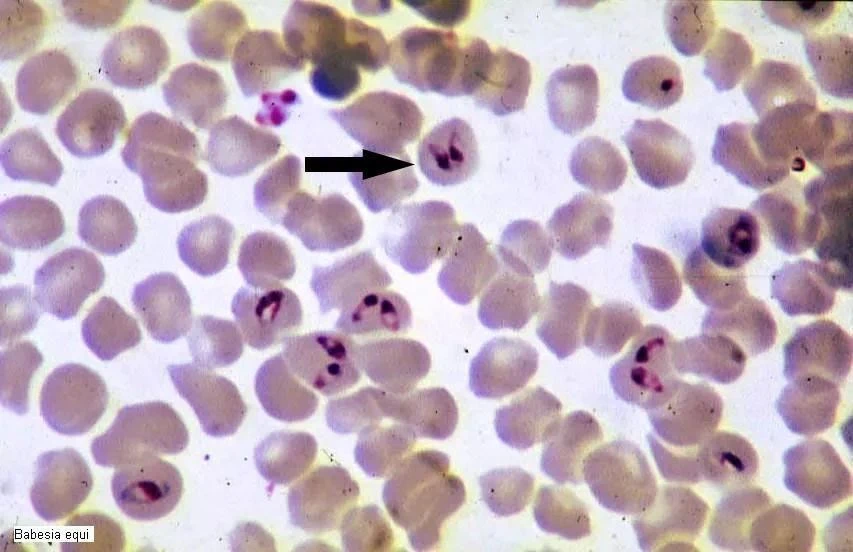
1. Pathogen
(A) Babesia canis. It is parasitic in canine red blood cells. The typical worm body is pear-shaped, about 4-5 μm long, with a pointed end on one end and a round section on the other with a vacuole inside. The body length of round or amoeba is 2-3μm. Babesia canis mainly infects canines such as dogs, wolves and foxes.
(B) Babesia gibsonii. It is parasitic in canine red blood cells. The worms are round, circular, oval, single pear-shaped, rod-shaped, cross-shaped and paired-pear-shaped occasionally seen, and are mostly located at the edge of the cell or off the center. The spreaders are ticks of the genus Rhipicephalus and Haemaphysalis.
(C) Babesia weberii. The body of the worm is slightly larger than that of Babesia canis, and is round, ovoid or pear-shaped.

2. Life history
The disease is caused by the bite of a tick infected with Babesia and sucking blood. Therefore, it mostly occurs in spring and autumn when ticks are active. The disease occurs in places where ticks live.
When a tick as an intermediate host bites a sick dog, the worm enters the digestive tract of the tick with the blood, and the red blood cells are digested. After the worm escapes, it invades the intestinal epithelial cells of the tick for most divisions, and then enters the mature egg of the tick. When the tick egg develops into a larva, the worm enters the larva’s intestine to reproduce, and finally migrates to the larva’s salivary glands to reproduce and develop into a new worm that is infectious to dogs. When the juvenile tick or tick sucks blood, the worm body enters the dog's body with saliva and multiplies in the red blood cell, causing the red blood cell to rupture, the worm body escapes, and then invades the new red blood cell, repeating its division and proliferation.
The infection route of Babesia canis also directly infects the fetus by the placenta
3. Symptoms
(1) The incubation period of natural infection of Babesia canis in dogs is 2-3 weeks. 5-7 days after the experimental infection, the body temperature rises, usually 39-40℃, and some are above 40℃, loss of appetite, vomiting, and yellowish-brown urine. Acutely passing dogs, with a body temperature of more than 40°C at the beginning, accompanied by jaundice anemia, suddenly collapsed. Chronic passing dogs have persistent fever, anemia and mild jaundice, liver and splenomegaly, and bilirubinuria.
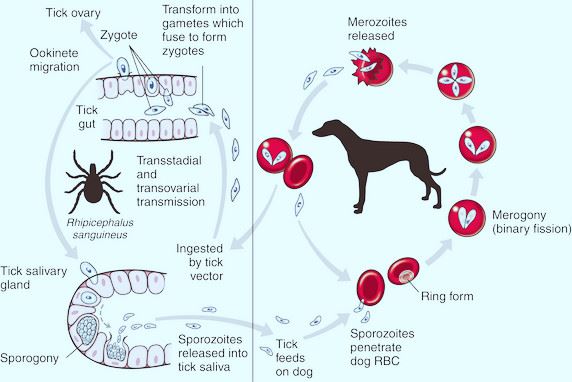
(2) Babesia gibsonii infected dogs, the body temperature at the beginning of the disease increased, and after 3-5 days, there was a period of 5-10 days of normal body temperature, showing irregular relapsing fever. The dog has a high degree of anemia, but often no jaundice occurs. As anemia worsens, urine changes from yellow to dark brown. Gradually appear depressed and lose appetite. Severe obvious malnutrition, unstable standing, visible mucosa pale. The spleen is obviously enlarged on palpation. When there is liver damage, the mucous membrane may be yellowish.
(3) Babesia weberii often causes extensive blood in the skin of the ears, back and other parts. Sick dogs often die of exhaustion. If you endure it, the anemia will gradually disappear after 3-6 weeks and you will recover.
4. Diagnosis
The diagnosis can be made based on the morphology of the red blood cells in the blood smear. It is also possible to inoculate the blood of suspected dogs into healthy dogs. Typical symptoms appear in about 4-6 days, and Babesia can be diagnosed in the blood.
And The following products of our company can quickly detect Babesia:
A. Babesia Combo Rapid Test Babesia Canis/Gibsoni Antibody Combo Rapid Diagnostic Test
B. Babesia Canis Antibody Rapid Test B. Canis Ab Rapid Diagnostic Test
C. Veterinary Test Canine Ehrlichia-Babesia-Anaplasma Ehr-Bg-Ana Combo Rapid Diagnostic Test
D. 4dx Test for Dogs Ehrlichia Babesia Anaplasma Heartworm Combo Rapid Test
5. Treatment
Use triazamidine (Benier, Schistosomiasis) 3.5mg/kg body weight subcutaneously or intramuscularly once a day for 2-3 days. Or intramuscular injection of 5 mg/kg body weight of imidazolide, intramuscular injection of acaprin 0.5 mg/kg body weight; 2-3 mg/kg body weight of yellow pigment, intravenous injection. Both have good insecticidal effects.
For dogs with severe anemia (hematocrit value below 15%), the effect of blood transfusion is obvious. At the same time, give vitamin B12 0.2mg intramuscular injection, 2 times a day; 20-100mg testosterone propionate intramuscular injection, 2 times a day; or oral artificial Replenish plasma 10ml, 3 times a day to promote hematopoietic function.
If you have jaundice and liver damage, you need liver protection drugs and energy mixture. During the recovery period of this disease, high-protein and high-energy food should be given, and attention should be paid to avoid excessive activity.
6. Prevention
To do a good job of preventing ticks on dogs, apply 25% deltamethrin solution to spray dogs every 7-10 days, or spray the environment to kill ticks. After a sick dog is found, other healthy dogs can be given preventive injections with drugs such as Bernier and Acaprin.