Glanders in Equines
Oct 28, 2026
What Is Glanders?
Glanders is a serious infectious disease. Burkholderia mallei, a bacterium, causes it. Horses, donkeys, and mules are the animals most affected. It is zoonotic - it can pass from animals to humans. Veterinary public health and international animal movement still see glanders as a major concern.
Several parts of the body can be affected: the respiratory system, the lungs, and the skin. Depending on the form of infection, animals may develop nasal discharge, ulcers in the nasal passages, lung lesions, or nodules beneath the skin. Horses may develop a chronic form. Donkeys and mules can experience a more acute course. Some infected animals carry the bacterium without obvious clinical signs.
Why Is Glanders Testing Important?
Early identification of glanders is essential. It protects equine health and helps prevent the spread of infection. International animal health control measures apply to the disease. Suspected cases require prompt investigation.
Routine surveillance and pre-movement testing are important components of glanders control. This matters particularly when horses and other equines cross national borders. Testing also supports veterinary authorities. It helps them monitor animal populations and investigate potential outbreaks.
What Is a Glanders Antibody Test?
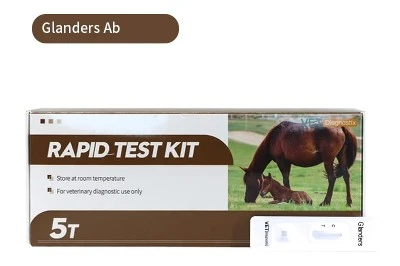
A Glanders Antibody Test detects antibodies. An animal's immune system produces these antibodies in response to B. mallei infection. The test supports serological surveillance and the investigation of suspected glanders cases. Horses and other equids are the main focus.
Antibody testing plays an important role in glanders surveillance. An immune response may be detectable before clear clinical signs appear. The timing of antibody development varies with the course of infection. Results should therefore be interpreted alongside the animal's history and other relevant findings.
Commonly used serological methods include the complement fixation test (CFT) and enzyme-linked immunosorbent assay (ELISA). The World Organisation for Animal Health (WOAH) identifies CFT as an important method. It is used for glanders surveillance and for testing equids before international movement. Positive serological findings are assessed according to established diagnostic protocols. Additional testing and identification of the pathogen are used where appropriate.
The Role of Antibody Testing in Equine Health
Glanders surveillance involves more than examining animals for visible symptoms. Antibody testing helps veterinary authorities investigate suspected infections. It also helps them monitor equine populations and support disease-control programs.
Horses, donkeys, and mules may be involved in breeding, transport, or international trade. For these animals, appropriate testing contributes to animal health management and biosecurity. Glanders is zoonotic and subject to official reporting requirements. Suspected cases should therefore be handled in accordance with the relevant veterinary authority's procedures.
References
World Organisation for Animal Health (WOAH). Glanders.
WOAH. Terrestrial Manual: Glanders.
European Food Safety Authority (EFSA). Assessment of the control measures of the category A diseases of Animal Health Law: Burkholderia mallei (Glanders).
Merck Veterinary Manual. Glanders in Horses and Other Equids.