What is Feline Leukemia Virus(Felv)?
Jul 21, 2021
Feline leukemia virus(Felv) infection:
Felv is not exactly the same as human leukemia as we know it. It is a malignant infectious disease caused by Feline Leukemia Virus (FeLV) infection. The main features are malignant lymphoma, myeloid leukemia, and non-regenerative anemia. The disease has no obvious seasonality, the incubation period is long, and the course of the disease is short.

1. Risk groups
Kittens and other felid. Kittens and cats with weakened immunity are most susceptible, but their susceptibility decreases with age.
2. Symptoms/Signs
Cats carrying the virus may not have any symptoms, but because the virus can lead to reduced immunity of cats, cats will gradually become weak and sick over time.
• Loss of appetite/significant weight loss
• Persistent high fever
• Swollen lymph nodes/tumor on the body surface
• Pale mucous membranes (anemia)
• Messy hair
• Long-term diarrhea
• Convulsions or other neurological symptoms, etc.

If the cat exhibits the above symptoms, then parents should quickly send the cat to a regular animal hospital for diagnosis and treatment. Cats infected with FeLV may show one or more disease symptoms, and the severity of the disease is often related to factors such as FeLV subtypes, the cat’s age, and immune status.
• Malignant lymphoma
Such as thymic lymphoma (causing swallowing and breathing difficulties, common in adult cats), gastrointestinal lymphoma (this type is more common, accounting for about 30% of cases), multiple lymphoma (the superficial diseased lymph nodes of the body can be touched by hand )Wait.
• Lymphocytic leukemia
It may appear alone or in combination with malignant lymphoma.
• Red blood cell and bone marrow leukemia
Including myeloproliferative diseases, it is the most common hematological malignancy in cats.
• Fibrosarcoma
It is the most common subcutaneous malignant tumor in cats.
• Myelodysplastic syndrome
The main feature is anemia, leukopenia or thrombocytopenia, and pale mucous membranes are visible to the naked eye.
• Immunosuppressive
Decreased T and B lymphocytes and reduced immunity of cats can easily cause secondary infections. In particular, co-infection with Feline HIV (FIV) and FeLV can aggravate immunosuppression and increase the possibility of cats suffering from lymphoma.
• Enteropathy
Cats and cats may have long-term diarrhea due to viruses attacking intestinal epithelial cells.
• Reproductive disorders
A pregnant female cat infected with feline leukemia virus may cause a miscarriage. If the fetus is given birth normally, it will show symptoms of FeLV infection such as weakness and susceptibility to illness.

How to diagnose?
• Blood test
Leukocytosis, anemia, red blood cells, hemoglobin, and hematocrit (HCT) are reduced, and the number of platelets is very small or even not observed in part of the field of vision. Among them, a large increase in white blood cells and an increase in large lymphoid cells indicate the occurrence of Fe LV infection.
• Blood biochemical test
Serum total protein (TP), cholesterol and blood calcium decreased, glucose, creatine kinase, serum aspartate aminotransferase (AST) increased, and serum albumin, glutamate aminotransferase (ALT), total gallbladder The red pigment and direct bilirubin remain basically unchanged, which indicates the occurrence of Fe LV infection.
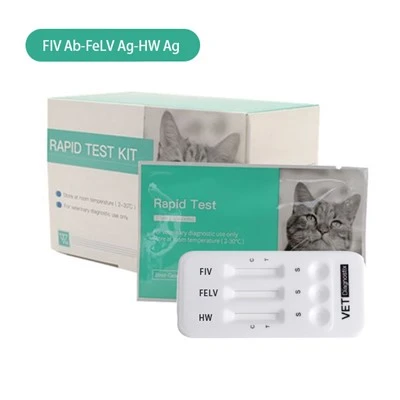
• Rapid Test Kit
The clinically commonly used cat leukemia detection kit detects the whole blood, serum or saliva of cats, and only 0.05mL of whole blood is required. Because this method needs to detect antibodies in cats and cats, and the incubation period of the virus is 3-4 weeks after infection, this method can only diagnose cats that have been infected for more than one month.
Evegen supply following test for FELV rapid test:

1. FIV Ab-FELV Ag Combo Rapid Test
https://www.vet-diagnostix.com/feline-rapid-test/fiv-felv-combo-test-kit.html
2. Feline Leukemia Virus Antigen FELV Ag Test
https://www.vet-diagnostix.com/feline-rapid-test/feline-leukemia-virus-antigen-felv-ag-test.html
3. Feline Immunodeficiency Virus Antibody/Leukemia Virus Antigen /Heartworm Antigen Combo Test
https://www.vet-diagnostix.com/feline-rapid-test/feline-immunodeficiency-antibody-leukemia.html
• A laboratory diagnosis will be performed when necessary. Laboratory diagnosis results are more accurate and can exclude viruses produced by vaccination.
Note: Hemochromatosis, immune-mediated hemolytic anemia and other diseases can also cause cats’ anemia. Inflammation in the body can also lead to an increase in white blood cells. In addition, cat immunodeficiency virus infection (feline AIDS) can also cause cat’s immune insufficiency. And other symptoms. Therefore, it is necessary for an experienced veterinarian to conduct a comprehensive analysis of the cat’s symptoms and laboratory results to avoid misdiagnosis and delay the condition.
Transmission channels/methods:
The source of infection of this disease is cats and cats in the incubation period. Their saliva, feces, urine, milk, nasal secretions, etc. all contain the virus, which can infect healthy cats and cats through the respiratory tract and digestive tract. It is mainly oral infection, which is directly transmitted by ingesting the virus in saliva. Therefore, close contact with sick cats and mutual licking are the main modes of transmission.
• Being bitten or scratched by a sick cat causes infection.
• Infection caused by bites of blood-sucking insects.
• In rare cases, it may be transmitted through the same litter box or food bowl as the sick cat.
• A sick pregnant cat infects a baby cat during pregnancy or breastfeeding.

Treatment:
There is currently no effective treatment for feline leukemia virus infection, only symptomatic treatment, but according to previous cases and related reports, cats still have a chance to recover, and parents can give them care and support treatment as much as possible.
• Treat anemia with whole blood transfusion or erythropoietin injection.
• Use of antiviral drugs such as interferon
• Use antibiotics to prevent concurrent infections and prevent sepsis caused by bacterial infections.
• Treat dehydration and anorexia
Note: The most effective "drug" against viral diseases is the resistance of cats and cats. Therefore, in addition to intravenous glucose and other nutrients, parents also need to ensure adequate food for cats and cats. If cats have poor appetite, parents can Feed a small amount of canned AD or cat's favorite food every 2-3 hours to supplement nutrition and ensure drinking water.
• Treatment of concurrent cancer with chemotherapy. Most cats suffering from lymphoma will die within 2 months if they are not treated. The survival time of cats after chemotherapy is about 10-12 months.
Note: The specific treatment plan needs to follow the doctor's advice. If you need to take digestive drugs or health products (lactase, probiotics, etc.) to adjust the cat's gastrointestinal function and promote diet, you should pay attention to such drugs and antibiotics to be taken separately and more than half an hour apart.

How to prevent feline leukemia virus infection:
• Try to avoid playing and playing with cats whose health status is unknown outside to prevent bites and scratches.
• Whether it is a cattery or a family, before accepting a new cat, it must be tested for FeLV.
• Many FeLV-positive cats can survive well, but will continue to detoxify. Therefore, they must be isolated from other healthy cats, otherwise the chance of infection in healthy cats can reach 10% to 15%.
• Pay attention to environmental hygiene and disinfect cats’ utensils regularly to provide them with a healthy and clean living environment.
• A reasonable combination of diet and balanced nutrition can improve cats' own immunity.
• Vaccination is also one of the methods of prevention. However, many Fe LV vaccines currently on the market can only provide partial protection, and the vaccines are not effective for individuals who have been infected with Fe LV. Therefore, cats should be tested for virus infection before vaccination.

Warm tips:
The potential adverse consequence of FeLV vaccination is that the injection site may cause sarcoma to grow. The recommended injection site is the back or tail of the left thigh. If a sarcoma appears at the injection site, surgery can be used to remove it directly. Therefore, before vaccinating the FeLV vaccine, parents need to consider the possible risks of the vaccine.
In the early stage of FeLV infection, the cat's symptoms are not obvious. Parents need to observe the status of their cats frequently to observe whether there are signs of weakness, swollen lymph nodes, breathing difficulties, or other underlying diseases.
Alcohol, acidic disinfectant or boiling water can be used for daily disinfection of the living environment and cat and cat utensils. Pay attention to the protection work when disinfecting.
If the cat’s physical condition is no longer suitable for further treatment, what parents can do is to accompany the cats more so that they are not lonely or afraid. If necessary, euthanasia will be the best way for the cats to relieve themselves.