Bovine Tuberculosis: Understanding the Disease and Antibody Test
Oct 26, 2026
What Is Bovine Tuberculosis?
Bovine tuberculosis (bTB) is a long-lasting infectious disease. It is caused mainly by Mycobacterium bovis, a bacterium that belongs to the Mycobacterium tuberculosis complex. The disease affects cattle most often, but it can also infect other mammals, including goats, deer, wildlife, and humans. For this reason, it matters for livestock health, farm management, and public health.
In cattle, infection usually develops slowly. Some infected animals show no clear signs for a long time. Others may lose weight, produce less, cough persistently, or develop enlarged lymph nodes as the disease progresses. Because early infections are hard to spot from clinical signs alone, routine surveillance is important for bTB control.
The disease spreads through close contact with infected animals, especially when respiratory droplets are released. It can also spread through contaminated feed or milk. Effective control therefore depends on finding infected animals, monitoring herds, and applying suitable veterinary and regulatory measures.
How Does a Bovine Tuberculosis Antibody Test Work?
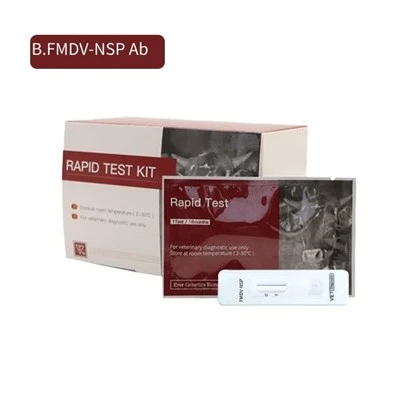
A Bovine Tuberculosis Antibody Test looks for antibodies that the animal's immune system makes in response to Mycobacterium bovis infection. These antibodies recognize specific bacterial antigens. This allows the test to detect an immune response linked to bovine tuberculosis.
Antibody tests use selected antigens to detect the humoral immune response. For example, MPB70 and MPB83 are among the antigens used in established serological assays for M. bovis. The choice of antigens matters because it affects how well the assay recognizes antibodies linked to infection.
Antibody testing can support bTB surveillance and herd health investigations. Results are read together with the animal's history, clinical findings, and other relevant diagnostic information to help veterinary decision-making.
Why Is Bovine Tuberculosis Monitoring Important?
Bovine tuberculosis can affect herd health over a long period. Regular monitoring is therefore an important part of livestock management. Finding animals that may be infected helps veterinary professionals assess herd health status and take appropriate action under local disease-control programs.
Serological testing can also give useful information at the herd level. In some situations, antibody detection may complement other testing approaches. It can support further investigation of suspected infections and help veterinarians evaluate disease patterns within a herd.
Because bTB is a zoonotic disease, its control also matters beyond animal health. Veterinary surveillance, livestock movement controls, suitable milk safety measures, and coordinated disease-management programs all help reduce the risk of transmission between animals and humans.
The Role of Antibody Testing in Veterinary Diagnostics
Bovine tuberculosis antibody testing is one of the tools available for investigating M. bovis infection. By detecting the immune response to specific bacterial antigens, serological assays can provide additional information for herd monitoring and disease-control activities.
For veterinary professionals and livestock health programs, understanding the purpose of antibody detection helps ensure that test results are interpreted appropriately and used as part of a broader assessment of bovine tuberculosis.
References
World Organisation for Animal Health (WOAH). Mammalian Tuberculosis (Infection with Mycobacterium tuberculosis Complex). Terrestrial Manual, Chapter 3.1.13.
USDA APHIS. Tuberculosis (Control and Eradication): NVAP Reference Guide.
WOAH. Guidelines for the Control of Mycobacterium tuberculosis Complex in Livestock. 2024.
B Cell and Antibody Responses in Bovine Tuberculosis. 2024. PubMed Central.
Marce, C., et al. Field evaluation of two commercial serological assays for detecting bovine tuberculosis. PubMed.