Trichomoniasis in Pet Birds
Nov 11, 2026
Page Lead Summary
Trichomoniasis remains a persistent, frustrating issue seen daily in avian practice. Silent carriers make it hard to contain, and outbreaks can quietly erode a breeding operation's bottom line. A reliable rapid antigen test gives clinicians a practical option to spot infection early, before trouble escalates.
Trichomoniasis in Pet Birds
Anyone working with companion birds will be familiar with trichomoniasis. It is a widespread protozoal infection, and budgerigars, cockatiels and lovebirds see the highest burden. For breeders, it is consistently one of the biggest drivers of chick loss.
Transmission most often occurs during parental feeding via regurgitation. Shared drinkers and feeding dishes create easy routes for horizontal spread. What makes this disease so tricky is the carrier state. A large number of adult birds harbour the parasite with no obvious clinical signs, yet they continue to shed it into the environment. These unseen reservoirs are why many aviaries face recurring flare-ups, even after repeated courses of treatment.
Once established, the parasite invades the mucosa of the oral cavity, pharynx, oesophagus and crop, forming firm yellow-white caseous plaques. Birds presenting clinically may show excess salivation, regurgitation, delayed crop emptying and difficulty eating. Weight loss progresses gradually, and severe individuals can succumb to airway obstruction or progressive debilitation. When the infection becomes entrenched within a breeding group, chick mortality rises and breeding output falls, translating into tangible losses for keepers. It is therefore a condition we prioritise when designing flock health plans, not just treating symptomatic patients.
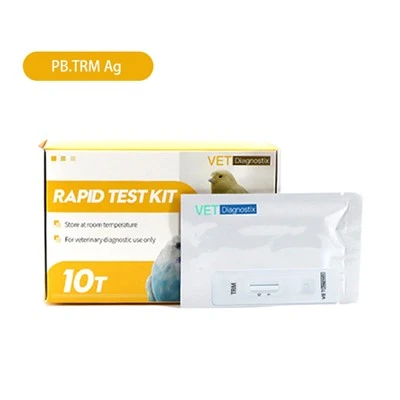
In routine practice, being able to identify carriers quickly makes a real difference. The Pet Bird Trichomonas Rapid Antigen Test is well suited for quarantine assessments for new arrivals, periodic flock surveillance and point-of-care evaluation of suspicious cases. It does not require dedicated laboratory infrastructure, and results are available quickly, so testing and interpretation can take place within the clinic or at the aviary itself.
Used thoughtfully, this assay helps clinicians identify asymptomatic carriers, guiding timely isolation and targeted management to limit onward spread. The simple workflow fits naturally into routine avian health workups. It can reduce the need for costly intervention once cases have advanced, lower avoidable mortality in valuable breeding birds and young chicks, and support stable production. For avian vets, it adds a dependable, convenient tool to build out practical flock health support for clients.